
 877-DEBT-NY-LAW
Default Judgment in New York: What It Means, How an Attorney Can Help, and Why Settlement Companies Cannot Defend You
What Is a Default Judgment?
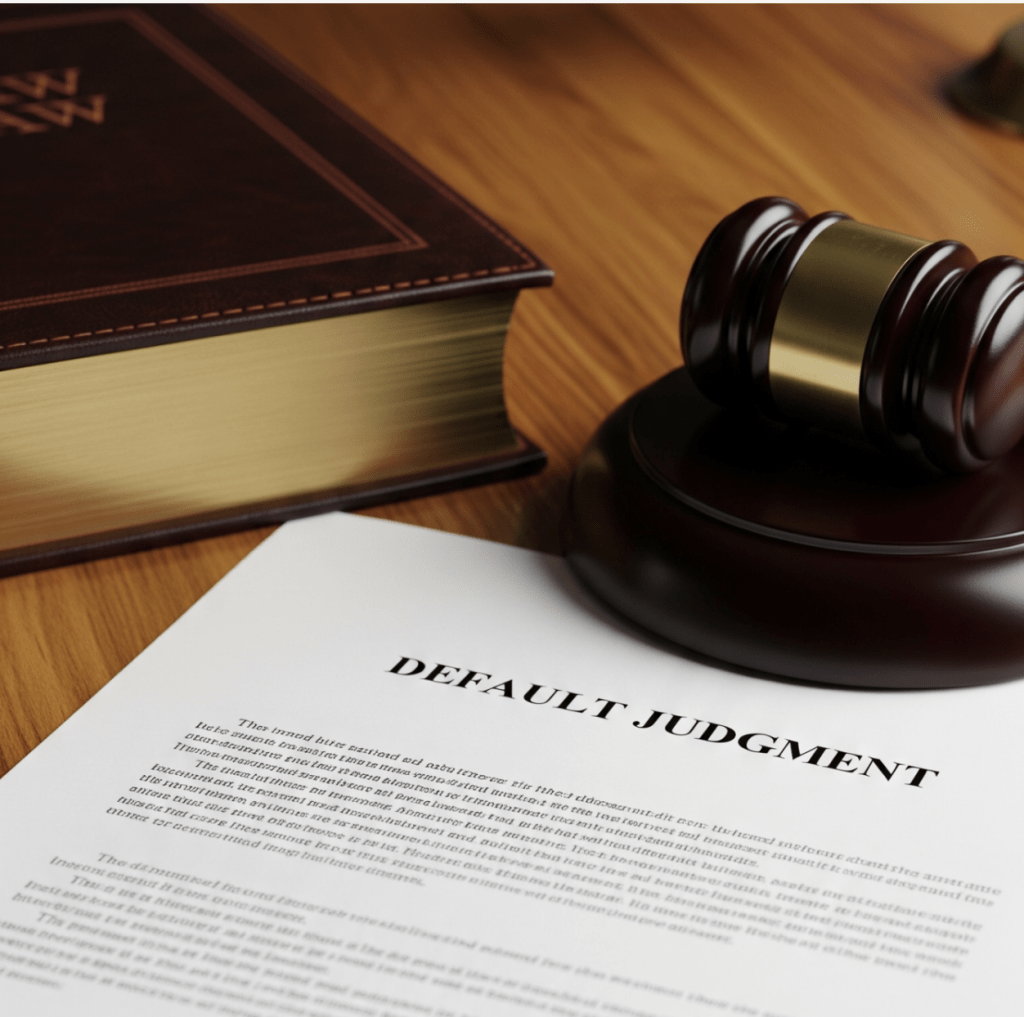
A default judgment happens when a creditor or debt collector sues you and you do not respond to the summons within the time allowed by law. In New York, defendants typically have 20 or 30 days to answer a lawsuit, depending on how they were served (N.Y. CPLR § 3012). If you fail to respond, the court assumes you do not contest the case and grants the creditor a judgment automatically.
That judgment gives the creditor powerful collection tools:
- Wage garnishment — taking part of your paycheck
- Bank account restraints — freezing funds in your account
- Liens on property — placing a claim against your home or other real estate
Unlike a collection letter or phone call, a judgment is legally enforceable. In New York, a creditor can enforce a money judgment for up to 20 years (CPLR § 211(b)), and a judgment lien on real property lasts 10 years and may be renewed (CPLR § 5203(a)).
Why Default Judgments Are So Common
Many New Yorkers never even realize they have been sued until after their bank account is frozen. Creditors often serve papers to old addresses or rely on what is known as “sewer service” — where a process server claims to have delivered papers but never actually did. According to data from the New York State Unified Court System, the overwhelming majority of consumer debt cases result in default judgments.
This makes default judgments one of the most dangerous threats for anyone struggling with credit card or personal loan debt.
What an Attorney Can Do About a Default Judgment
Hiring an attorney after a default judgment has been entered is not too late. In fact, it may be the most critical time to have legal representation. An experienced consumer debt defense attorney can:
File a Motion to Vacate the Judgment
If you were never properly served or if you had a legitimate reason for not responding (known as an “excusable default”), your lawyer can file a motion to vacate under CPLR § 5015. Vacating the judgment reopens the case, giving you a chance to defend yourself in court.
Assert Defenses Under State and Federal Law
Your attorney can raise defenses that settlement companies cannot, including:
- The statute of limitations — three years in New York for consumer debt claims accruing on or after April 7, 2022 (CPLR § 214-i)
- Improper service of process
- Lack of standing (the plaintiff cannot prove it owns the debt)
- Violations of the Fair Debt Collection Practices Act (15 U.S.C. § 1692 et seq.)
Negotiate From a Position of Strength
When a lawyer is involved, creditors know the consumer has legal defenses. That leverage often results in more favorable settlement terms compared to what non-lawyer negotiators can achieve.
Prevent Wage Garnishments and Account Freezes
An attorney can move quickly for court orders to stay enforcement while motions are pending. Without this, garnishments and freezes continue, draining your income and leaving you unable to cover basic expenses.
Provide Strong Advocacy for You in Court
Only a licensed attorney can file motions, argue before a judge, or appear at trial. National debt settlement companies are prohibited by law from providing legal representation.
What National Settlement Companies Cannot Do
Debt settlement companies market themselves as a way to “reduce your debt.” But when a default judgment is entered — or when you are actively being sued — these companies are powerless. Here is why:
They Cannot Vacate a Judgment. Only an attorney admitted to practice in New York can file the necessary motion in court. Settlement companies cannot draft legal papers, argue motions, or appear before a judge.
They Cannot Stop Garnishments or Bank Restraints. Once a judgment is active, creditors can seize wages and freeze bank accounts. Debt settlement companies have no authority to stop enforcement actions. By contrast, an attorney can file immediate motions for relief.
They Cannot Raise Legal Defenses. Settlement firms cannot assert statute of limitations defenses, challenge improper service, or invoke consumer protection laws on your behalf. These are legal defenses that require licensed counsel.
They Charge High Fees Without Court Power. Most national settlement firms charge fees of 15–25% of the debt enrolled or of the amount saved — even though they cannot defend you in court. In comparison, attorneys charge for actual legal work performed, and their efforts can directly protect your assets.
They May Violate New York Law. In New York, only lawyers can provide legal advice or represent clients in legal proceedings. Settlement companies are not licensed law firms and cannot ethically or legally protect you from a judgment.

Real-World Illustration: Judgment vs. Attorney Defense
The following scenarios are hypothetical illustrations. Results vary based on the facts of each case.
Scenario A — Using a Settlement Company John enrolls $30,000 in credit card debt with a national settlement company. After eight months of making payments into the program, he is sued by one of his creditors. The company tells him they “cannot help with lawsuits.” A default judgment is entered, his bank account is frozen, and he cannot access his paycheck.
Scenario B — Hiring a Law Firm Maria is sued on $30,000 in credit card debt. She hires Georgiou Law. We file an immediate response to the lawsuit and investigate the creditor’s claims. After identifying that service of process was defective, we move to vacate the default judgment. The court reopens the case, and we negotiate a settlement on favorable terms while halting wage garnishment.
The difference is clear: one path leaves you vulnerable, the other gives you real legal protection.
Why Georgiou Law Is Different
At Georgiou Law, you don’t get routed to a call center or pressured into one-size-fits-all “programs.” When you call, you speak directly to an attorney who has represented both banks and consumers. That insider knowledge is used to fight back against aggressive creditors.
We provide:
- Case-specific legal strategies tailored to your situation
- Flat-rate and transparent fee structures (no hidden settlement percentages)
- Aggressive negotiation backed by litigation readiness
- Direct access to your attorney—not salespeople
Frequently Asked Questions About Default Judgments
How long does a default judgment last in New York?
Up to 20 years (CPLR § 211(b)).
Can my wages be garnished immediately?
Yes. Once a judgment is entered, creditors can garnish up to 10% of your gross wages or 25% of disposable income, whichever is less (CPLR § 5231).
Can a lawyer really get a judgment vacated?
Yes, if there was improper service or a valid legal defense. Every case is fact-specific, but courts routinely vacate judgments where due process was violated.
Should I call a debt settlement company?
If you already have a judgment—or are being sued—no. They cannot defend you in court. Only an attorney can.
Take Action Now
A default judgment is not the end of the road. With the right legal help, you can stop garnishments, reopen your case, and fight back against creditors. Georgiou Law defends consumer debt cases in Brooklyn, Queens, Manhattan, the Bronx, and Staten Island.
Call Georgiou Law today at (917) 764-3072 for a free consultation.
Don’t let a piece of paper signed by a judge control your financial future. With experienced legal counsel, you can take back control and negotiate from strength.
References
- New York Civil Practice Law and Rules §§ 214-i, 211(b), 3012, 5015, 5203(a), 5231(b)
- Fair Debt Collection Practices Act, 15 U.S.C. § 1692 et seq.
- New York State Unified Court System — Consumer Credit Reform
- NYC Bar Association — Debt Collection Guide
- Federal Trade Commission — Debt Relief and Bankruptcy



